Posts

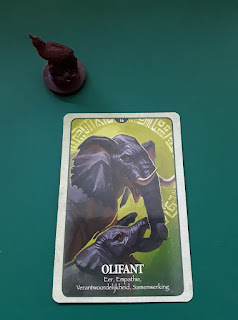
Olifant

Afbeelding
OLIFANT... als de olifant zich aandient, trompettert hij luid. Met veel geluid wil hij aangeven dat we even moeten onthaasten. We zijn zo druk met de uiterlijke kant van ons leven dat we ons innerlijke kant vergeten. Nu is het het moment om even tot onszelf te komen. Aanvaardt je gevoel van vrijheid en doorbreek maar de grenzen tussen ons en anderen. Dan zal je merken hoeveel geluk er bij je is. Normaal loop je daaraan voorbij....

I Spy

Afbeelding
  March 25, 1967, TV Guide cover featured Robert Culp and Bill Cosby of I Spy. The popular NBC espionage series starred the duo as intelligence agents Kelly Robinson and Alexander Scott, and was groundbreaking for casting Cosby as one of the first Black actors in a leading dramatic television role. The show ran for three seasons and earned critical acclaim, including multiple Emmy Awards. The cover promoted the feature article “Got Problems? Blame Television (Everyone Else Does),” reflecting the era’s growing debate over television’s influence on society.

The Tonight Show

Afbeelding
  March 25, 1976, this memorable behind-the-scenes photo captured Ray Charles, Orson Welles, Redd Foxx, and Demond Wilson together during the height of 1970s television. Taken on the set of Sanford and Son, the image brings together four iconic figures from music, film, and television in a rare crossover moment. Foxx and Wilson were starring as Fred and Lamont Sanford on the hit NBC comedy, which ran from 1972 to 1977 and became one of the defining sitcoms of the era. According to accounts of the photo, it was taken backstage during a taping connected to The Tonight Show Starring Johnny Carson, where Charles and Welles were appearing as guests that same day. With both shows filmed at NBC facilities, the stars crossed paths—resulting in this unique gathering of entertainment legends.

Moonwalk

Afbeelding
  March 25, 1983, Michael Jackson debuted his signature move, the Moonwalk, on television. The moment came during a performance of “Billie Jean” on the NBC special Motown 25: Yesterday, Today, Forever. Although the special was taped earlier, it aired on this date and stunned audiences, with Jackson appearing to glide backward across the stage in a way that seemed almost unreal. The performance instantly became one of the most talked-about moments in television and music history. Jackson had refined the move from earlier street and dance styles, but his presentation brought it to a global audience and made it forever associated with his name.

Perfect Strangers

Afbeelding
    March 25, 1986, Perfect Strangers premiered on ABC. Created by Dale McRaven, the sitcom starred Mark Linn-Baker as Larry Appleton and Bronson Pinchot as Balki Bartokomous, whose fish-out-of-water friendship became the heart of the show. The series followed their comedic culture clashes as Balki, a naĆÆve immigrant from the fictional island of Mypos, adjusted to life in America. After a short six-episode first season in spring 1986, the show found lasting success when it moved to Friday nights, becoming a cornerstone of ABC’s popular TGIF lineup. Its blend of physical comedy, heartfelt moments, and catchphrases made it a fan favorite throughout its run. Perfect Strangers aired for eight seasons, concluding on August 6, 1993, and remains a memorable part of 1980s and early 1990s television.

9 to 5

Afbeelding
  March 25, 1982, 9 to 5 premiered on ABC. The series ran on the network from its debut on March 25, 1982, until October 27, 1983, before later returning in first-run syndication from September 13, 1986, to March 26, 1988. Based on the hit 1980 film 9 to 5, the sitcom followed three office workers navigating workplace challenges and friendships. Rachel Dennison starred as Doralee Rhodes, taking on the role originally played by her sister, Dolly Parton. Rita Moreno played Violet Newstead, while Valerie Curtin portrayed Judy Bernly in the early run. In its syndicated revival beginning September 13, 1986, the series underwent several cast and character changes, with new workplace dynamics and a shift in setting while retaining its ensemble comedy style. Across its run, the show produced 85 episodes, with only Rachel Dennison appearing throughout the entire series.

Cagney & Lacey

Afbeelding
  March 25, 1982, Cagney & Lacey premiered. The acclaimed CBS police procedural ran for seven seasons from March 25, 1982, to May 16, 1988, and followed two very different New York City detectives working out of the fictional 14th Precinct in Manhattan. Christine Cagney (Sharon Gless) was a career-driven, independent woman, while Mary Beth Lacey (Tyne Daly) balanced her job with life as a wife and mother, creating one of television’s most enduring partnerships. The series evolved from a made-for-TV movie and went through early casting changes, including performances by Loretta Swit and Meg Foster before Sharon Gless took on the role of Cagney for the majority of the run. The show gained critical acclaim for its writing and performances, becoming a landmark for strong female leads in television drama. Both Daly and Gless frequently earned Emmy recognition, with Daly winning four times and Gless twice. Despite early cancellations by CBS due to ratings concerns, public outcry and ...

The Mississippi

Afbeelding
    March 25, 1983, The Mississippi premiered. The legal drama starred Ralph Waite as Ben Walker, a successful criminal attorney who retires and takes to life on a sternwheel riverboat along the Mississippi River—only to find himself repeatedly drawn back into the courtroom to help those in need. The cast also included Linda Miller and Stan Shaw as members of his loyal crew. Blending legal drama with adventure, the series followed Walker as he traveled from port to port, balancing his desire for a quiet life with his instinct to fight injustice. Filming took place on location along the Mississippi River, including in Natchez, Mississippi, and Memphis, Tennessee. The series ran for two seasons and 24 episodes, concluding its run on March 5, 1984.

The Monkees

Afbeelding
  March 25, 1968, the final episode of The Monkees aired on NBC. The series originally premiered on September 12, 1966, and ran for two seasons until its conclusion on March 25, 1968. The Monkees—featuring Micky Dolenz, Davy Jones, Michael Nesmith, and Peter Tork—were created in 1965 by producers Bob Rafelson and Bert Schneider for a television sitcom inspired by the success of The Beatles. The series blended comedy, music, and a fast-paced visual style that anticipated the modern music video. While initially criticized as a manufactured group—with early recordings relying on session players like the Wrecking Crew—the band fought for and gained creative control of their music in 1967. At their peak, the Monkees were among the biggest acts in the world, earning four consecutive No. 1 albums—The Monkees, More of the Monkees, Headquarters, and Pisces, Aquarius, Capricorn & Jones Ltd.—along with three No. 1 singles: “Last Train to Clarksville,” “I’m a Believer,” and “Daydream Belie...
Howard E. Koch

Afbeelding
  Howard E. Koch (December 12, 1901 – August 17, 1995) While practicing law in Hartsdale, New York, he began to write plays. Great Scott (1929), Give Us This Day (1933), and In Time to Come (1941) were produced on Broadway. His radio work in the 1930s as a writer for the CBS Mercury Theater of the Air included the Orson Welles radio drama The War of the Worlds (1938), which caused nationwide panic among some listeners for its documentary-like portrayal of an invasion of spaceships from Mars. Koch then began writing for Hollywood studios. His first accepted screenplay was made into a 1940 film. Koch contributed to the popular film Casablanca with Humphrey Bogart, which he co-scripted with writers Julius and Philip Epstein in 1942, and for which he received an Academy Award in 1944. He also wrote Shining Victory (1941), and Letter from an Unknown Woman (1948), his favorite screenplay. However, his screenplay for Mission to Moscow (1943), which portrayed Joseph Stalin and the Soviets ...

Roquefort

Afbeelding
Roquefort cheese created in a cave near Roquefort, France . Roquefort is a semi-hard blue cheese from the south of France. Only a limited area around the town of Roquefort can produce it. According to legend, Roquefort cheese was discovered when a youth, eating his lunch of bread and ewes' milk cheese, saw a beautiful girl in the distance. Abandoning his meal in a nearby cave, he ran to meet her. When he returned a few months later, the mold, penicilin Roquefort, had transformed his plain cheese into Roquefort! The youth tasted it anyway, and Roquefort cheese was born. By the middle ages, Roquefort had become a recognized cheese. On 4th June 1411, Charles VI granted a monopoly for the ripening of the cheese to the people of Roquefort~sur~Soulzon, as they had been doing for centuries. The mould that gives Roquefort its distinctive character, peniciln roquefort, is found in the soil of the local caves. Traditionally, the cheesemakers extracted it by leaving bread in the caves for ...

Zwitserland

Afbeelding
Zwitserland In het plaatsje Morrens, even ten noorden van Lausanne, staat deze schitterende eik. Hij is vermoedelijk rond de 400 jaar oud. Hij schijnt ooit genomineerd te zijn als mooiste boom van Zwitserland. Boom is ongeveer 250 jaar. Je kunt hem gewoon vanaf de weg bekijken. In Nederland zou zo'n boom nationaal bekend zijn, in veel landen wordt hij zelfs nergens vermeld.  

Kessel

Afbeelding
  Aan de Rijksweg net buiten Kessel (Limburg) staat een erg fraaie tamme kastanje in een voortuin. De boerderij dateert van 1818, zo oud zal de boom niet zijn. Hij dateert denk ik uit de tweede helft van de 19e eeuw. Er staan in Limburg, in de regio van Nijmegen en de Duitse grensregio opvallend veel grote tamme kastanjes bij boerderijen. De bomen zijn hier oorspronkelijk geĆÆntroduceerd door de Romeinen.

Vraag om hulp

Afbeelding
VRAAG OM HULP... Wij mensen willen alles maar alleen oplossen. Gaat het goed met je? Je zal vaak Ja horen zeggen want we zijn trots. Alleen soms is het nodig om hulp te vragen als je er zelf niet uit komt. Wie vertrouw je daarin? Laat al je angsten los en vertrouw erop dat het universum je met liefde zal helpen. Vraag je engelen om raad en Let op de tekens die je mag ontvangen. ...

It Takes a Thief

Afbeelding
  March 24, 1970, the final episode of It Takes a Thief aired on ABC, concluding a three-season run that began on January 9, 1968. The series starred Robert Wagner in his television debut as sophisticated thief Alexander Mundy, who works for the U.S. government in exchange for his freedom from prison. For most of the series, Malachi Throne played Noah Bain, Mundy’s boss, though in the third season Edward Binns replaced him as Wallie Powers when portions of the season were filmed in Europe. Created by television writer Roland Kibbee, the series was inspired by the 1955 Cary Grant film To Catch a Thief. Alexander Mundy is a cat burglar and playboy who reluctantly agrees to steal for the fictional Secret Intelligence Agency, prompting his famous line, "Let me get this straight. You want me to steal?" Noah Bain’s catchphrase in the opening titles was, "Oh, look, Al, I’m not asking you to spy. I’m just asking you to steal." The pilot, “A Thief is a Thief is a Thief,” was...

Doogie Howser, M.D

Afbeelding
    March 24, 1993, the final episode of Doogie Howser, M.D. aired. The series, created by Steven Bochco and David E. Kelley, starred Neil Patrick Harris as teenage physician Dr. Douglas “Doogie” Howser, who balanced the pressures of practicing medicine with the challenges of adolescence. The show ran on ABC from September 19, 1989, to March 24, 1993, spanning 97 episodes over four seasons and becoming a defining dramedy of its era. The series followed Doogie as a prodigy who became one of the youngest licensed doctors in the country, working at Eastman Medical Center while living at home with his parents, played by James B. Sikking and Belinda Montgomery. Each episode often ended with Doogie writing reflections in his computer journal, highlighting both medical challenges and personal lessons. In the final episode, Doogie resigns from Eastman Medical Center and leaves for Europe, a conclusion that aligned with plans by the creators for a longer story arc in which the characte...

The Stockard Channing Show

Afbeelding
    March 24, 1980, The Stockard Channing Show premiered. The CBS sitcom aired from March 24 to July 12, 1980, producing 13 episodes as a midseason replacement. The series starred Stockard Channing alongside Ron Silver, Sydney Goldsmith, Max Showalter, and Jack Somack. It aired Mondays at 8:30 p.m. ET as part of a strong CBS lineup that included WKRP in Cincinnati, M*A*S*H, and Flo. The show followed Channing as Susan Goodenow, a recently divorced woman navigating life and relationships. It shared similarities with her earlier series Stockard Channing in Just Friends, including character elements and production continuity, though it was presented as a separate concept. Despite the network’s efforts to build on Channing’s rising popularity following films like Grease and The Cheap Detective, the series struggled to gain traction and was not picked up for a full season. After its cancellation, Channing would not return to a sitcom starring role until Out of Practice.

The Bad News Bears

Afbeelding
    March 24, 1979, The Bad News Bears premiered. The CBS sitcom aired from March 24, 1979, to July 26, 1980, producing 26 episodes, with three installments unaired by the network. Based on the hit film The Bad News Bears and its sequels, the series starred Jack Warden as Morris Buttermaker, a former minor-league ballplayer coaching a struggling youth team, the Hoover Junior High Bears. Catherine Hicks co-starred as principal Dr. Emily Rappant, with Phillip Richard Allen as rival coach Roy Turner. The young cast included Corey Feldman, Billy Jayne (then billed as Billy Jacoby), Meeno Peluce, and Tricia Cast as standout pitcher Amanda Wurlitzer. Originally airing Saturdays at 8:00 p.m., the series experienced multiple time slot changes during its run. After being moved to 8:30 p.m. in its second season, declining ratings led CBS to cancel the show after only a few episodes. The network later aired the remaining unaired episodes in the summer of 1980, but continued scheduling sh...

Paul Lukas

Afbeelding
  Paul Lukas, born PĆ”l LukĆ”cs (May 26, 1894 – August 15, 1971) He won the Academy Award for Best Actor for his performance in the film Watch on the Rhine (1943). Lukas made his stage debut in Budapest in 1916 and his film debut in 1917. At first, he played elegant, smooth womanizers, but increasingly he became typecast as a villain. He had a successful stage and film career in Hungary, Germany, and Austria, where he worked with Max Reinhardt. He arrived in Hollywood in 1927 and became a naturalized citizen of the United States in 1937. He was busy in the 1930s, appearing in such films as the melodrama Rockabye, the crime caper Grumpy, Alfred Hitchcock's The Lady Vanishes, the comedy Ladies in Love, and the drama Dodsworth. He followed William Powell and Basil Rathbone portraying the series detective Philo Vance, a cosmopolitan New Yorker, once in The Casino Murder Case (1935). His major film success came in Watch on the Rhine (1943), where he played a man working against the Nazis,...

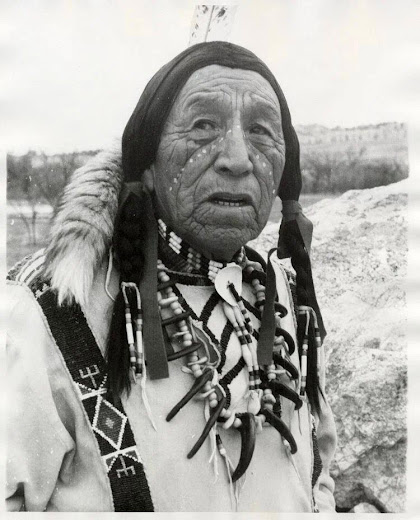
Black Elk

Afbeelding
HeȟÔka SĆ”pa (Black Elk) (December 1, 1863 – August 19, 1950) was a famous wičhÔŔa wakČŸĆ”Å‹ (medicine man and holy man) and heyoka of the Oglala Lakota (Sioux) who lived in the present-day United States, primarily South Dakota. He was a second cousin of the war chief Crazy Horse. Name Black Elk Movies Yes We Can Black Elk Ben Black Elk Oglala by Paul B Steinmetz Pine Ridge Born December 1, 1863Little Powder River, Wyoming (1863-12) Resting place Saint Agnes Catholic Cemetery, Manderson, South Dakota Children Benjamin (?–1973)JohnLucy Looks Twice (?–1978) Died August 19, 1950, Pine Ridge Indian Reservation Spouse Anna Brings White (m. 1905–1941), Katie War Bonnet (m. 1892–1903) Books Black Elk Speaks, The gift of the sacred pipe, Les rites secrets des Indiens Sioux Similar People John Neihardt, Kabir, Homer, Faith Hubley